

Made in USA Clothing: Why Your Shirt's Origin Matters
A shirt can travel through several countries before it reaches your closet, which makes its origin more meaningful than a small tag at the neckline. Where cotton is grown, fabric is made, and sewing takes place can shape the jobs supported. The distance materials travel, and how clearly a brand can explain its process.
Shop US cotton tees from Mindful Supply and wear your values.
Made in USA clothing generally means more than a product shipped from a U.S. warehouse. Under the Federal Trade Commission's standard, an unqualified claim means the product is assembled in the United States. Significant processing happens here, and all or virtually all components are of U.S. origin. It can also give shoppers a clearer way to support domestic textile communities, especially when a brand shares its supply chain.
That transparency matters at Mindful Supply, where the journey can be traced from 100% U.S. cotton in North Carolina through textile and apparel production across the Carolinas. To understand why that journey matters, it helps to look first at the industry it supports today.
For more context, read our guide to responsibly made clothing.
What Does the American Textile Industry Look Like Today?
The American textile industry is smaller than it was a generation ago, but it has not disappeared. According to the U.S. Bureau of Labor Statistics, apparel manufacturing employment fell by 85 percent between 1991 and 2016, the largest decline among manufacturing industries during that period. Textile mills also lost a substantial share of their jobs. That history helps explain why local textile jobs matter to communities that once depended on them.
At the same time, the sector remains a significant part of American manufacturing. The U.S. Department of Commerce reports that the textile industry employed more than 500,000 people and recorded $64.8 billion in shipments in 2023. The United States was also the world's second-largest exporter of textile-related products in 2021, with more than $29 billion in exports. These figures show an industry that is changing, not vanishing.
From lost jobs to a visible supply chain
Mindful Supply was created in response to that change. Founders David Grubbs and Derek Glass left corporate careers with a goal of helping restore local textile jobs. Their Greensboro, North Carolina-based brand makes responsibly made goods while keeping the path from material to finished shirt visible.
For example, the cotton used in the brand's core supply chain begins at Thomas Burleson & Sons Farms in Richfield, North Carolina. It is ginned at Rolling Hills Gin, spun into yarn at Hill Spinning in Thomasville, knitted by Contempora Fabrics. Cut and sewn by Granite Knitwear in Granite Quarry, North Carolina, and printed or dyed by TS Designs in Burlington, North Carolina. This is a regional chain with identifiable places and partners, rather than a vague claim about a product being American-made.
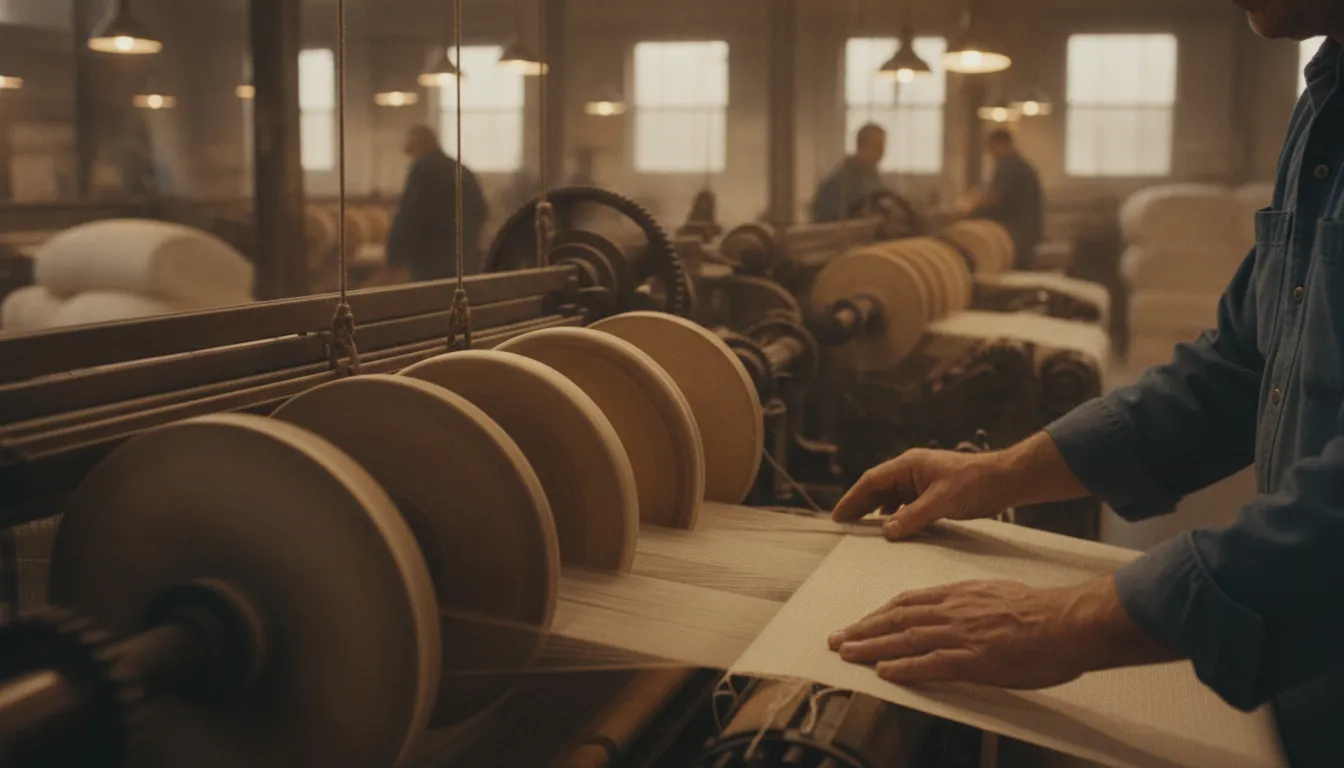
That transparency also gives shoppers a more useful way to think about made in the USA clothing. The question is not only where a shirt ships from. It is how much of its journey can be understood, and which workers and communities are part of making it. Mindful Supply's supply chain supports more than 700 American workers and their families, connecting an everyday purchase to the people behind the product.
Why Does Made in USA Clothing Often Mean Fewer Miles Traveled?
Where clothing is made can shape more than a label. It can influence how far cotton, fabric, trims, and finished garments travel before reaching a closet. Shorter routes do not solve every environmental challenge in apparel, but they can reduce the transportation involved in moving a product across multiple continents.
The scale of the industry makes that consideration meaningful. The United Nations Framework Convention on Climate Change estimates that fashion accounts for approximately 2% to 8% of global greenhouse gas emissions. With about 80% of the industry's emissions occurring in its supply chain. Read the UNFCCC's supply-chain findings for the broader context.
Fewer shipping miles, a clearer route
A shirt assembled through a long, fragmented supply chain may travel between farms, mills, dye houses, cut-and-sew facilities, printers, ports, warehouses, and distribution centers. A domestic or regional supply chain can bring more of those steps within the same country or neighboring states. The result is a simpler route with fewer long-distance shipping legs. It is more precise to say "fewer miles traveled" than to promise that a garment has no environmental impact.
Mindful Supply's journey is centered in the Carolinas. The brand uses 100% U.S. cotton from Richfield, North Carolina, ginned at Rolling Hills Gin, spun at Hill Spinning in Thomasville. And knitted by Contempora Fabrics before Granite Knitwear cuts and sews the fabric and TS Designs prints or dyes it. You can follow the Made In the Carolinas supply chain from "dirt to shirt."
Materials and processes still matter
Distance is only one part of a garment's footprint. The materials and processes used along the route matter, too. Mindful Supply's production details include Blue Sign certified dyes and water-based inks, alongside fabric made in the USA. Those specifics give shoppers something more useful than a broad environmental promise: a clearer view of what the product is made from. Where it moves, and how it is finished.
That kind of transparency makes made in USA clothing easier to evaluate. Instead of treating a domestic label as a complete environmental guarantee, look for the full story behind it. A shorter, traceable supply chain is one practical signal of responsible production, especially when a brand explains the people, places, materials, and processes involved.
What Do Domestic Manufacturing Standards Actually Guarantee?
Choosing domestic production can connect your clothing purchase to jobs closer to home, but it helps to understand what the label actually promises. A Made in USA claim is primarily a country-of-origin claim, not a blanket certification of every workplace practice. The Federal Trade Commission says an unqualified claim means a product must be assembled in the United States. With all significant processing completed here and "all or virtually all" components of U.S. origin. The standard applies to the product as a whole, rather than simply to its final shipping location.
What the Made in USA standard covers
The FTC's Made in USA guidance gives shoppers a useful starting point. Look for a clear distinction between where a garment was made and where it ships from. "Ships from the USA" only describes fulfillment. The product may have been manufactured elsewhere before entering a U.S. warehouse. That difference matters when you want your purchase to support domestic makers and textile communities.
Textile, wool, and fur products also have specific U.S.-content disclosure requirements under federal law. The FTC's compliance guidance explains that these products must disclose U.S. content where applicable. In practical terms, a thoughtful brand should be able to explain where its fiber. Fabric, finishing, sewing, and printing take place, rather than relying on a vague patriotic phrase.
Why the supply chain still matters
Domestic manufacturing standards can make production easier to trace, but the strongest signal is meaningful supply-chain transparency. Mindful Supply shares a Carolinas journey that begins with 100% U.S. cotton from Richfield, North Carolina, ginned at Rolling Hills Gin. Spun in Thomasville, and knitted by Contempora Fabrics before Granite Knitwear handles the cut and sew and TS Designs prints or dyes the finish. You can follow that path through the brand's Know Your Shirt page.
That network supports more than 700 American workers and their families. It also reflects a practical way to strengthen local textile knowledge and employment: keep more stages of production connected within the region. The label alone cannot guarantee every detail of labor conditions, so ask brands for specifics and evidence. When a company can name its production partners and explain the journey from fiber to finished garment, shoppers have more information to make a genuinely mindful choice.
How Can You Verify a Brand's Made in USA Clothing Claim?
A thoughtful label is a starting point, not the whole story. Use these checks to distinguish a genuinely documented origin claim from a vague reference to American fulfillment or design.
| Phrase on the label | What it actually tells you |
|---|---|
| Made in USA | For an unqualified claim, the product should be all or virtually all made in the United States, with significant processing done here. |
| Ships from the USA | Only describes fulfillment. The garment may have been produced elsewhere and stored in a U.S. warehouse before reaching you. |
| Designed in the USA | Describes where design happened, not where the fabric, sewing, or finishing took place. |
-
Read the garment label and product details
Start with the sewn-in label, then compare it with the product page. Look for a specific country-of-origin statement rather than phrases such as "designed in the USA" or "ships from the USA." The latter describes shipping location only. As the Federal Trade Commission explains, a product that ships from the USA may have been made elsewhere and sent to you from a domestic warehouse.
-
Check the claim against the FTC standard
An unqualified "Made in USA" claim means the product must be assembled in the United States. With all significant processing here and "all or virtually all" components of U.S. origin. That standard applies to the substance of the claim, not just the wording on a hangtag. For clothing, also remember that textile, wool, and fur products are subject to specific country-of-origin disclosure requirements. The FTC's compliance guidance explains how those requirements work together.
-
Look for a traceable supply chain
Trust grows when a brand can name more than a final assembly location. Can it identify where the fiber was grown, where the fabric was made, and where cutting, sewing, dyeing, or printing happened? Mindful Supply shares a "Know Your Shirt" journey that traces its product from 100% U.S. cotton grown in Richfield, North Carolina through ginning, spinning. Knitting, cut and sew at Granite Knitwear, and printing or dyeing across North and South Carolina.
-
Ask the brand a specific question
If the information is incomplete, contact the brand before buying. Ask which parts are made in the United States and whether the claim applies to the entire garment or only one component. A transparent answer should identify the stages and locations involved, not rely on a broad patriotic phrase. Brands that document their process make it easier for shoppers to choose responsibly, even when a product's origin is more nuanced than a single label can show.
Why Supporting Domestic Apparel Brands Is an Act of Mindful Shopping
Mindful shopping starts with paying attention. Instead of treating a shirt as a quick transaction, you can pause to consider who made it, where its materials came from, and what your purchase helps sustain. That does not mean every mindful choice has to be perfect. It means choosing more intentionally when useful information is available.
For apparel, domestic production can make that information easier to follow. Mindful Supply's supply chain begins with 100% US cotton from Richfield, North Carolina. Then moves through ginning, spinning, knitting, cut and sew at Granite Knitwear, and printing across the Carolinas. Shoppers can explore that journey from dirt to shirt through the brand's Made In the Carolinas Supply Chain page. That kind of visibility gives a purchase a human and geographic context beyond a generic label.
It also connects clothing to community. Mindful Supply was founded by David Grubbs and Derek Glass after they left corporate jobs with a goal of helping restore local textile work. Today, the supply chain supports more than 700 American workers and their families. Choosing Mindful Supply is one way to participate in that broader story while selecting quality apparel designed for everyday life.
Mindful shopping can extend beyond the garment itself. At checkout, Mindful Supply lets customers direct charitable giving by choosing from six charity partners. The brand also supports Reconsidered Goods, a Greensboro nonprofit creative reuse center that keeps materials out of landfills and makes them available for art, education, and community projects. Your purchase can therefore reflect more than personal style. It can help support workers, local communities, and practical reuse.
For a deeper look at the choices behind this approach, read about responsibly made clothing. The goal is not to shop from a sense of guilt. It is to stay present, ask better questions, and choose pieces whose origins and purpose align with your values.
Browse the responsibly made collection to find classic tees made from US cotton.
Frequently Asked Questions
What does Made in USA mean on a clothing label?
For an unqualified claim, the Federal Trade Commission says a product must be all or virtually all made in the United States. Including significant processing and nearly all components. Textile labels may also need to disclose country-of-origin information. Read the exact wording rather than assuming that an American flag or a brand's location tells the whole story. FTC guidance explains the standard.
Is clothing that ships from the United States made there?
Not necessarily. "Ships from the USA" describes where an item is sent to you, not where its materials were processed or where it was sewn. A garment can be imported and stored in a U.S. warehouse before shipping. Look for a clear manufacturing statement and a supply-chain explanation that identifies the fiber, fabric, finishing, and sewing locations.
How can I verify a brand's American-made clothing claim?
Start with the garment label, then visit the brand's sourcing or supply-chain page. True transparency names specific places and production steps, not just "designed in the USA." Mindful Supply traces its cotton from Richfield. North Carolina through spinning, knitting, and cut and sew at Granite Knitwear in Granite Quarry, North Carolina. See the Know Your Shirt journey.
Does buying American-made clothing support local jobs?
It can help sustain domestic textile and apparel work by directing demand toward U.S. farms, mills, dyers, printers, and sewing facilities. The U.S. apparel industry lost 85% of its employment over the 25 years ending in 2016. According to the Bureau of Labor Statistics, so a transparent regional supply chain represents a meaningful choice for shoppers. Read the BLS data.
Get started with a more mindful wardrobe
Where a shirt is made can tell you more about the people, materials, and decisions behind it. If you are ready to choose clothing with a clearer story, shop the responsibly made collection and find a classic tee made for everyday wear.