

Minimalist Wardrobe: Live with Less and Wear with Intention
A minimalist wardrobe intentional living approach is not about making your closet as small as possible. It is about keeping clothes that support your actual days, buying with care, and giving your attention to what you wear instead of what you might buy next. For a broader look at how clothing, values, and everyday choices connect, read Mindful Supply's guide to an intentional living wardrobe.
Shop responsibly made Classic Tees
What Is a Minimalist Wardrobe, and Why Can Less Feel Like More?
A minimalist wardrobe is a deliberately edited collection of clothes that fit your real life, work together easily, and earn repeat wear. The point is not a fixed number of items. The point is less friction, fewer impulse purchases, and more confidence in the pieces you already own.
Minimalism can look different from one person to the next. Someone who works outdoors, travels often, or does laundry once a week will need different clothing than someone who works from home and lives in a warm climate. A useful wardrobe is personal, not a challenge to copy from someone else's checklist.
The most helpful question is simple: Does this piece make getting dressed easier and living my day more comfortable? If the answer is usually no, the item may be taking up more space than value.
How to Audit Your Closet and Keep Only What You Wear
A closet audit is less about judging your past purchases and more about noticing your current habits. Set aside an hour when you can make decisions without rushing. You do not need to empty every drawer at once. Start with the clothes you reach for most often, then work outward.
Begin with your actual week
Think through a normal week, including work, rest, exercise, errands, social plans, weather, and laundry. Pull out the items that already serve those moments well. This gives you a picture of your real wardrobe instead of an imaginary lifestyle.
- Keep: Pieces that fit comfortably, suit your routine, and are worn regularly.
- Reconsider: Items you like in theory but avoid because of fit, care, discomfort, or limited pairing options.
- Release: Clothes that no longer fit your body, life, or sense of self, especially when you keep them out of guilt.
Use the repeat-wear test
For each item, ask whether you have worn it in the last season, whether you would choose it again today, and whether it works with at least two or three outfits you already enjoy. One special piece does not need to be versatile if it genuinely earns its place. A basic does not earn a place simply because it is called a basic.
Make a small repair pile rather than keeping damaged items in your everyday rotation. Give yourself a clear deadline to mend, alter, or repurpose them. If that deadline passes and the item still has not returned to use, you have useful information about its role in your life.
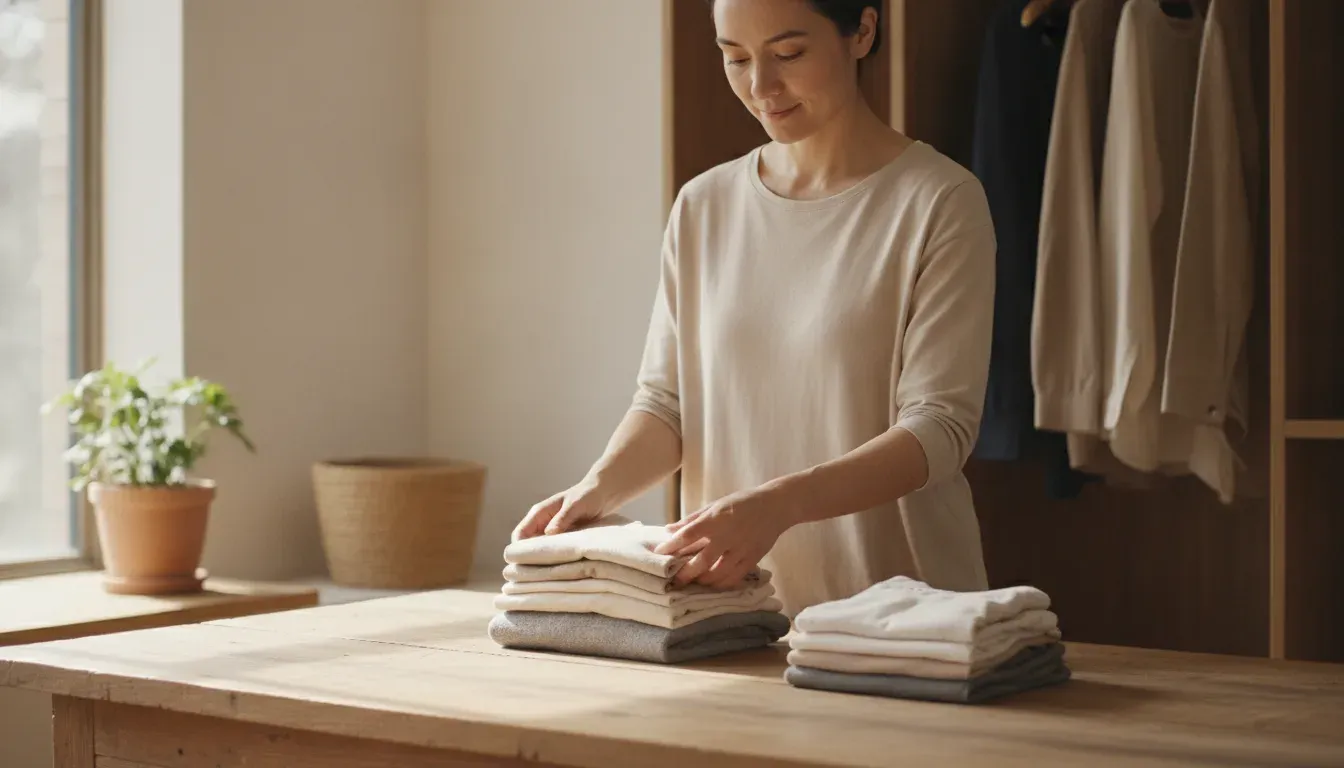
The Mindful Purchase Decision: Quality, Origin, and Purpose
Once you have edited your closet, the next step is resisting the urge to fill every empty space. A smaller wardrobe becomes useful when new purchases solve real problems instead of creating new ones.
Before adding a piece, pause over four questions:
- What job will it do? Name the real situations in which you will wear it.
- What will it work with? Picture it with clothes you already own, not only with the rest of a styled product page.
- How will it feel to maintain? Consider fit, fabric, washing, drying, and the care you can realistically provide.
- Can I understand how it was made? Look for specific information about materials, origin, construction, and the people involved.
This is where a minimalist wardrobe connects naturally with mindful shopping. A pause does not mean never buying anything. It means giving a purchase enough thought that it can become part of your life rather than a short-lived experiment.
Quality is not only a feeling or a higher price. Look for useful construction details, a comfortable fit, fabric suited to your climate, and a design you can imagine wearing repeatedly. Origin matters too. A brand that explains its materials and production gives you more information for a responsible decision than a vague promise about being better.
Mindful Supply's Classic Tee, for example, is made with 100% U.S. combed ring-spun cotton, with fabric made in the USA and responsibly sewn in Nicaragua. The line also uses Blue Sign certified dyes. Those details do not make one garment right for every person, but they show the kind of concrete information a thoughtful shopper can look for.
For a closer look at Mindful Supply's people, purpose, and roots, visit the Mindful Supply story. The goal is not to claim that one brand or one item solves every concern. It is to make better-informed choices about the clothes you will actually wear.
Shop versatile Classic Tees for a more intentional wardrobe
How to Maintain a Minimalist Wardrobe Without Losing Your Style
Minimalism works best as a rhythm, not a one-time purge. After your first audit, give your wardrobe a few simple habits that keep it useful without turning clothing into a strict project.
Create a short reset before buying
When you want something new, wait a day or two and review what you already own. Try making the outfit you think the new item will complete. Sometimes the missing piece is not another purchase. It is a different combination, a small repair, or a clearer idea of what you like to wear.
Let your wardrobe reflect your style
A minimalist wardrobe does not have to be plain or colorless. Graphic tees, meaningful accessories, texture, and a favorite unusual layer can all belong. The test is whether a piece feels like you and works with your days. Keeping fewer items should make personal style more visible, not erase it.
Care for what stays
Follow the care guidance for each garment, wash only when needed, and avoid treating every item as disposable. Fold or hang pieces in a way that makes them easy to see. When clothes are visible and accessible, they are more likely to be worn. When they are buried in an overfilled drawer, even good pieces become forgotten.
Review by season, not by trend
At the change of a season, notice what you wore, what you avoided, and what made daily dressing difficult. Store only what genuinely needs to be out of rotation, and keep a short list of any future gaps. This turns shopping into a considered response to your life rather than a reaction to every new trend.
Why Fewer, Better Pieces Can Improve Your Daily Routine
The benefit of a smaller wardrobe is not a perfect closet. It is the ability to make ordinary decisions with less noise. When most of your clothes fit your life and work together, choosing an outfit takes less negotiation. You can spend more attention on the day ahead instead of on the pile of clothes you are not wearing.
Repeat wear can also make a wardrobe feel more like a record of your life. The tee you reach for on a travel day, the layer that works on a cool morning, and the hat you keep by the door become useful companions. They do not need to be new to be meaningful.
Living with less is not a test of discipline or a race toward a smaller number. It is a way to notice what is enough. Choose clothes that you can wear often, understand more clearly, care for honestly, and keep for the life you are actually living.
Shop responsibly made Classic Tees
Frequently Asked Questions
How many clothes should be in a minimalist wardrobe?
There is no universal number. The right size depends on your climate, work, activities, laundry schedule, body, and style. A minimalist wardrobe is defined by usefulness and repeat wear, not by reaching a specific count.
How do I start a minimalist wardrobe without throwing everything away?
Start with an audit. Keep the pieces you wear and enjoy, set aside repair candidates, and move unused items out of your daily space. Replace worn or missing essentials gradually instead of buying a complete new wardrobe at once.
Can graphic tees fit into an intentional wardrobe?
Yes. A graphic tee can be an intentional choice when you like the design, feel comfortable wearing it, and can pair it with clothes already in your closet. Personal meaning and real use matter more than whether a garment looks like a traditional neutral basic.
Is a minimalist wardrobe the same as a capsule wardrobe?
They overlap, but they are not identical. A capsule wardrobe is usually a coordinated group built for easy mixing and matching. A minimalist wardrobe is a broader approach to owning and choosing less, and it does not require a fixed capsule size or color formula.
Start small: wear what you already love, notice what earns repeat use, and let each future purchase meet a real need. That is how a closet becomes simpler without becoming someone else's idea of simple.