

T-Shirt Fabric Weight Guide: GSM, Oz, and How to Choose
When two cotton tees look similar on the rack, the lighter one is not automatically the better choice. Fabric weight helps explain the difference, but comfort also depends on fiber, yarn, knit, fit, and finishing. This t-shirt fabric weight guide explains GSM and ounces, compares common ranges, and helps you choose a tee for the way you actually dress. For the larger quality picture, see Mindful Supply's guide to responsibly made clothing.
What Does T-Shirt Fabric Weight Measure?
Fabric weight describes how much a defined area weighs, usually in grams per square meter or ounces per square yard. Mindful Supply uses this kind of specification to describe fabric, not the total weight or quality of a finished shirt.
A label such as 150 GSM or 5 oz describes the fabric. It does not describe the complete garment. Body length, size, seams, ribbing, labels, and finishing details all change the weight of the shirt you hold.
What does GSM mean?
GSM means grams per square meter. A higher GSM means more material occupies that defined area. It often creates a denser hand feel and more structure. GSM applies to cotton, polyester, wool, and blends, so it describes weight rather than quality.
What does oz mean on a t-shirt label?
In apparel, oz usually means ounces per square yard, written as oz/yd2. One oz/yd2 is roughly 33.9 GSM. As a quick guide, 150 GSM is about 4.4 oz/yd2, while 170 GSM is close to 5 oz/yd2. Manufacturers may round their figures, so use conversions to compare products rather than treating them as laboratory measurements.
A 6 oz label generally refers to fabric weight per square yard. It does not mean the finished tee weighs six ounces. A NIST textile-testing reference shows why a defined sample area is necessary for a meaningful comparison.
Check the unit, fiber content, and construction when a product page lists only one number. Two tees with the same GSM can have different stretch, surface texture, and recovery because their knits are built differently.
How Do Lightweight, Medium-Weight, and Heavyweight Tees Compare?
Lightweight tees feel airy and drape easily, medium-weight tees balance breathability with coverage, and heavyweight tees feel denser and more structured. These are practical categories rather than universal standards, so fiber, knit, finish, and cut can change how the same number feels.
| Category | Approximate range | Typical feel | Useful for |
|---|---|---|---|
| Lightweight | 3.0 to 4.5 oz/yd2 100 to 150 GSM |
Airy and softly draped | Hot weather and easy layering |
| Medium weight | 4.5 to 5.5 oz/yd2 150 to 180 GSM |
Balanced and versatile | Everyday, year-round wear |
| Heavyweight | 5.5+ oz/yd2 180+ GSM |
Dense and structured | Cooler weather and defined silhouettes |
These ranges are useful starting points and align with published t-shirt weight guidance. Lightweight fabric may feel more comfortable in heat and humidity, but it can provide less coverage. Medium weight is often a flexible middle ground. Heavyweight fabric can feel substantial and hold its shape, but it may also feel warmer.
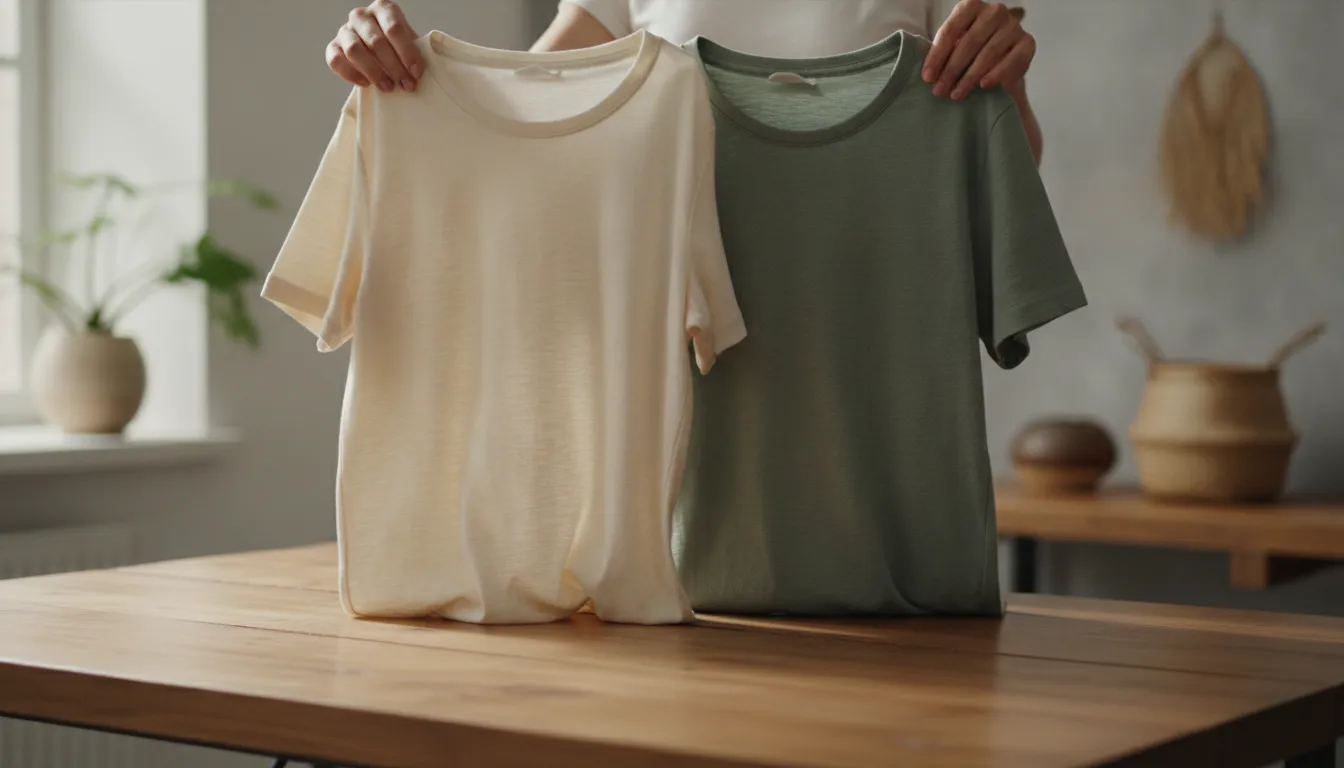
How Does Fabric Weight Affect Feel, Coverage, and Durability?
Fabric weight affects how a tee feels, drapes, and covers the body, but it is only one part of durability. Fiber quality, yarn construction, knit density, seams, collar design, finishing, printing, and care all contribute to how a garment wears.
- Feel: Heavier fabric often feels more substantial. Lighter fabric usually feels softer and airier in motion.
- Coverage: A denser knit is often less see-through than a lightweight alternative. Color and construction still matter.
- Drape: Lightweight fabric tends to fall softly. Heavier fabric can hold a more defined shape through the torso.
- Warmth: More material may feel warmer in cool weather. A light tee can be more comfortable in heat.
Durability is more complicated than choosing the highest number. A thin fabric may be more vulnerable to thinning, but weight does not promise unlimited wear. Smooth surfaces, stable knits, strong seams, and thoughtful care may matter more for your use than a small difference in GSM.
Printing and finishing also deserve attention. Mindful Supply uses water-based inks on the Signature Tee. Look for a collar that sits evenly, seams that lie flat, and hems that do not twist after washing. Follow the product's care directions rather than assuming a heavier tee can withstand every washing method.
For a broader buying checklist, read Mindful Supply's guide to responsibly made clothing. Fabric weight becomes more useful when considered with fiber content, construction, origin, and care.
Why Does the Mindful Supply Signature Tee Use 6 Oz Fabric?
Mindful Supply's Signature Tee uses 6 oz fabric for a substantial everyday feel with more structure than a very light tee. Its 100% U.S. Airlume combed ring-spun cotton and water-based inks add product context that the weight number alone cannot provide.
The 6 oz figure describes fabric weight per square yard, not the finished shirt's total weight. It places the Signature Tee toward the substantial end of a common everyday range. That can work well as a stand-alone layer or under an open overshirt, depending on your climate and preferred fit.
The Signature Tee is made from 100% U.S. Airlume combed ring-spun cotton. The product is also described as heirloom quality and uses Blue Sign certified dyes. These are separate product details, not a claim that weight alone determines quality.
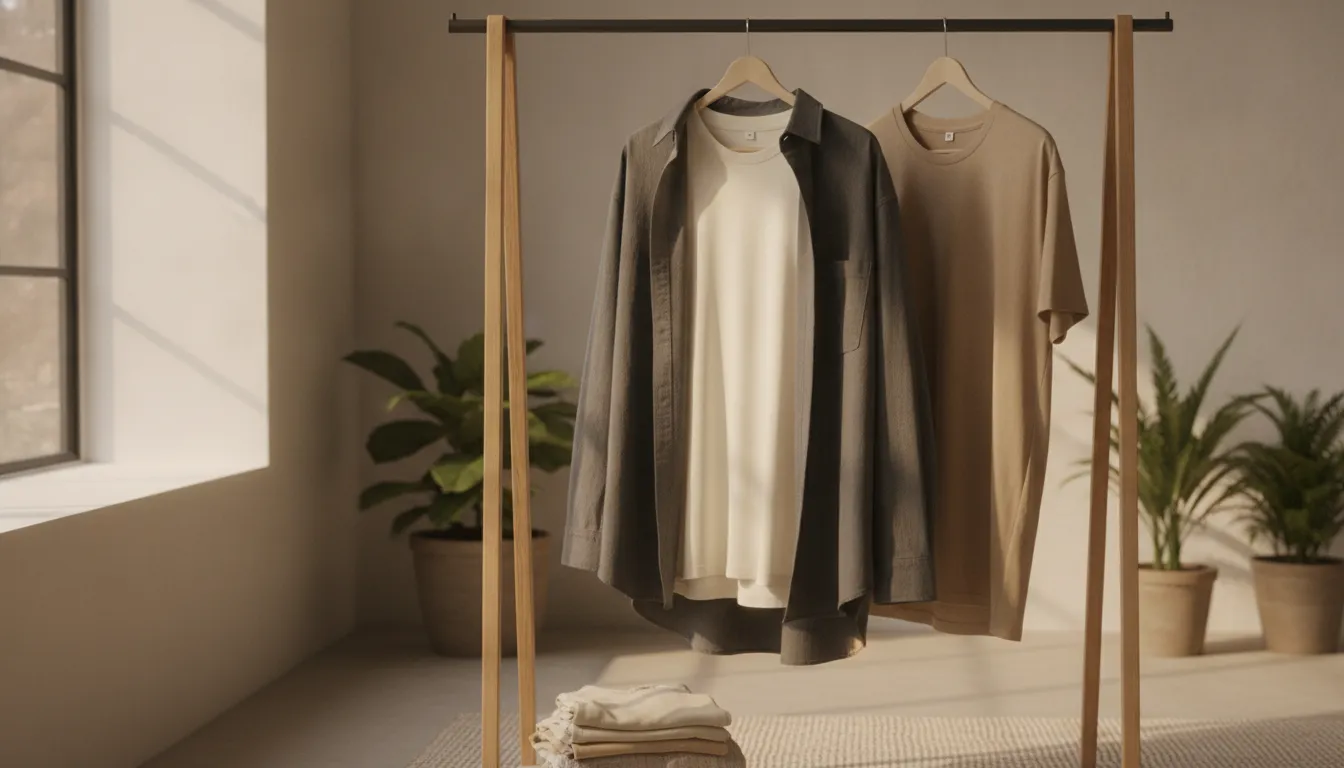
Visit the Mindful Supply Signature Tee collection for current colors, sizing, and availability. Product pages are the best place to confirm details before buying.
How Should You Use This T-Shirt Fabric Weight Guide When Shopping?
Use a t-shirt fabric weight guide as a decision tool, not a quality score. Match the number to your climate, layering habits, preferred drape, coverage needs, and the complete material description before choosing a tee.
- Match the weight to your climate. Lighter fabric may feel better in hot or humid weather. A heavier tee can add comfort in cooler seasons.
- Think about layering. A light tee can reduce bulk under an overshirt or jacket. A heavier tee can hold its shape as a stand-alone layer.
- Choose your preferred drape. Light fabrics move easily and create a relaxed look. Heavier fabrics feel more structured through the torso.
- Check coverage. Weight can help, but color and knit construction also affect opacity.
- Read the full specification. Compare fiber content, yarn type, construction, fit, finishing, and care guidance.
When two tees have similar numbers, first confirm that both brands use the same unit. Then compare fiber and yarn construction. If you are shopping for someone else, do not treat weight as a universal preference. Choose based on the wearer's climate, comfort, and everyday habits.
To explore the brand's broader approach to materials and making, visit Mindful Supply's About page. A useful specification should help you build a better wardrobe, not pressure you to chase the highest GSM.
What Should You Check Besides T-Shirt Fabric Weight?
Fabric weight is a helpful starting point, but fiber content, yarn construction, knit density, fit, and finishing give you a more complete picture of a tee.
Start with the fiber description. Two shirts can have the same weight while feeling different because one uses a smooth combed yarn and the other uses a different cotton preparation or a blend. A fiber label will not tell you everything about softness. It does help you compare like with like.
Next, look for information about the yarn and knit. Ring-spun yarn is often used for a smoother hand. Knit density affects stretch, recovery, and coverage. These details explain why two shirts with similar GSM numbers may not feel interchangeable.
Fit changes the experience too. A close-fitting shirt can feel warmer than a loose shirt made from the same fabric. A boxy cut can make a heavier tee feel more structured. Shoulder seams, side seams, collar construction, and hem finishing also affect how the garment sits after repeated wear.
Consider the graphic and the finish if you are buying a printed tee. Mindful Supply uses water-based inks on its Signature Tee. The ink method is one part of the product story. The fabric surface and care instructions still matter for the way the graphic feels and ages.
Finally, ask how the shirt fits your actual wardrobe. A light tee may be ideal beneath a jacket. A heavier tee may work better as a stand-alone layer. Someone who lives in a warm climate may value airflow over structure. Someone who prefers a crisp silhouette may welcome more substance. Neither preference is a universal measure of quality.
This is also where responsible production becomes part of a thoughtful purchase. Material information, construction details, and supply-chain transparency help you understand what you are buying. A weight number cannot answer every question. It can give you a common measurement that makes the rest of the product description easier to evaluate.
How can you compare two tees with different weight units?
Convert both specifications to the same unit before making a judgment. This keeps a shirt listed in GSM from seeming lighter or heavier simply because its label uses a different convention. Remember that the conversion is approximate. Manufacturers may round their numbers or measure slightly different materials within a garment.
After converting, compare the rest of the product details. Look at fiber content, yarn type, knit, cut, and finishing. A 180 GSM tee is not automatically more comfortable than a 160 GSM tee. The better choice depends on the feel you want, the weather where you live, and how you plan to wear it.
Also consider how the tee will be washed and stored. A shirt that fits your routine is more useful than one chosen for a number alone. If you wear it often, check the care guidance and choose a construction that feels practical for your regular week.
For a printed graphic tee, also consider whether the fabric gives the artwork the surface and structure you prefer. A smooth, stable surface can create a different impression from a very soft, drapey knit. Read the description carefully, then use the weight as one useful piece of evidence rather than the entire decision.
Frequently Asked Questions About T-Shirt Fabric Weight
What GSM is best for an everyday t-shirt?
For a versatile everyday tee, roughly 150 to 180 GSM, or about 4.5 to 5.5 oz/yd2, is a useful starting range. Choose lighter fabric when airflow matters most and heavier fabric when you prefer more coverage or structure.
Does a heavier t-shirt always mean better quality?
No. Heavier fabric can feel more substantial and may offer more opacity, but fiber type, yarn, knit density, stitching, finishing, printing, and care also affect quality. A lighter tee can be better when softness and breathability are priorities.
What does 6 oz mean on a t-shirt label?
Six ounces usually refers to fabric weight per square yard, not the finished shirt's total weight. It generally indicates a substantial everyday fabric. Mindful Supply's Signature Tee pairs 6 oz fabric with 100% U.S. Airlume combed ring-spun cotton.
How do I convert GSM to ounces for t-shirts?
For a rough conversion, multiply GSM by 0.0295. For example, 170 GSM is approximately 5 oz/yd2. Manufacturers may round their figures, so use the result to compare products rather than treating it as an exact finished-garment weight.
Sources
Measurement context: NIST textile-testing reference. Weight ranges: Printful t-shirt weight guide. Product details: Mindful Supply Signature Tee collection.