

How to Think About What To Wear For A Day Hike
Wondering what to wear for a day hike? Start with the forecast, the trail, and how warm you tend to feel once you are moving. A comfortable outfit does not need to be complicated or brand new: choose clothes that let you move, add a layer you can take off, and plan for conditions to change.
Shop the Classic Tee collection
For a simple everyday starting point, browse the Classic Tee collection; what works on a hike still depends on weather and activity. For a broader look at how clothing choices connect to responsible apparel, read our guide to responsibly made clothing.
What to Wear for a Day Hike: Start With the Forecast
Think through four things before you get dressed: temperature, precipitation, trail exposure, and effort. A shaded woodland route in mild weather calls for something different from a sunny climb or a windy ridge. Check the forecast for the hours you expect to be out, not just the temperature when you leave home.
- Temperature: Consider both the starting temperature and the expected high. You may warm up quickly once you are climbing.
- Rain and wind: A light rain or a breezy overlook can make a comfortable outfit feel chilly. Bring a layer that gives you some protection if conditions call for it.
- Sun and shade: An exposed route can feel much hotter than a shaded trail. Choose coverage you will actually be comfortable wearing.
- Effort and pace: A steep, fast hike can make you sweat more than a slow walk. Leave room to adjust rather than dressing for the coldest moment alone.
- What you already own: Familiar clothing is useful. You know whether it pinches, rides up, or feels comfortable after several hours.
These checks make the outfit personal rather than prescriptive. The best choice is the one suited to your route and conditions, not a special uniform you need to buy for the occasion.
How can you use layers to stay comfortable?
Layers let you adjust as your body warms up or the weather shifts. For many mild-weather day hikes, begin with a comfortable base layer, carry a light insulating layer, and add weather protection when the forecast or route makes it useful. You may not need all three on your body at once.
Start with a comfortable base
Choose a top that feels good against your skin and allows you to reach, bend, and swing your arms. A T-shirt can work well for an easy hike in mild, dry weather, especially if you already know it stays comfortable during activity. If you expect sustained sweating, colder weather, or a long stretch without a chance to dry off, consider a fabric and layering combination designed for those conditions. Cotton can hold moisture, so it may feel cold when damp; it is not the right choice for every hike.
If you want to check the details of a particular garment before deciding, see Mindful Supply's product specifications. Clothing details help you compare, but they do not replace choosing for the hike's weather and effort.
Add or remove warmth as needed
Bring a light layer you can put on when you stop, reach a breezy spot, or feel the temperature drop. A layer that packs down easily is convenient because you can carry it instead of wearing it throughout the climb. Avoid starting out bundled up if you know you warm quickly; you can begin at a comfortable pace and adjust after a few minutes.
Think about weather protection
If rain or wind is likely, consider a suitable outer layer. On a dry, warm day, you may not need one. If the hike is remote or conditions are changeable, do not rely on a cotton T-shirt alone to keep you warm once it is wet. Use the forecast and your route to decide what protection to carry.
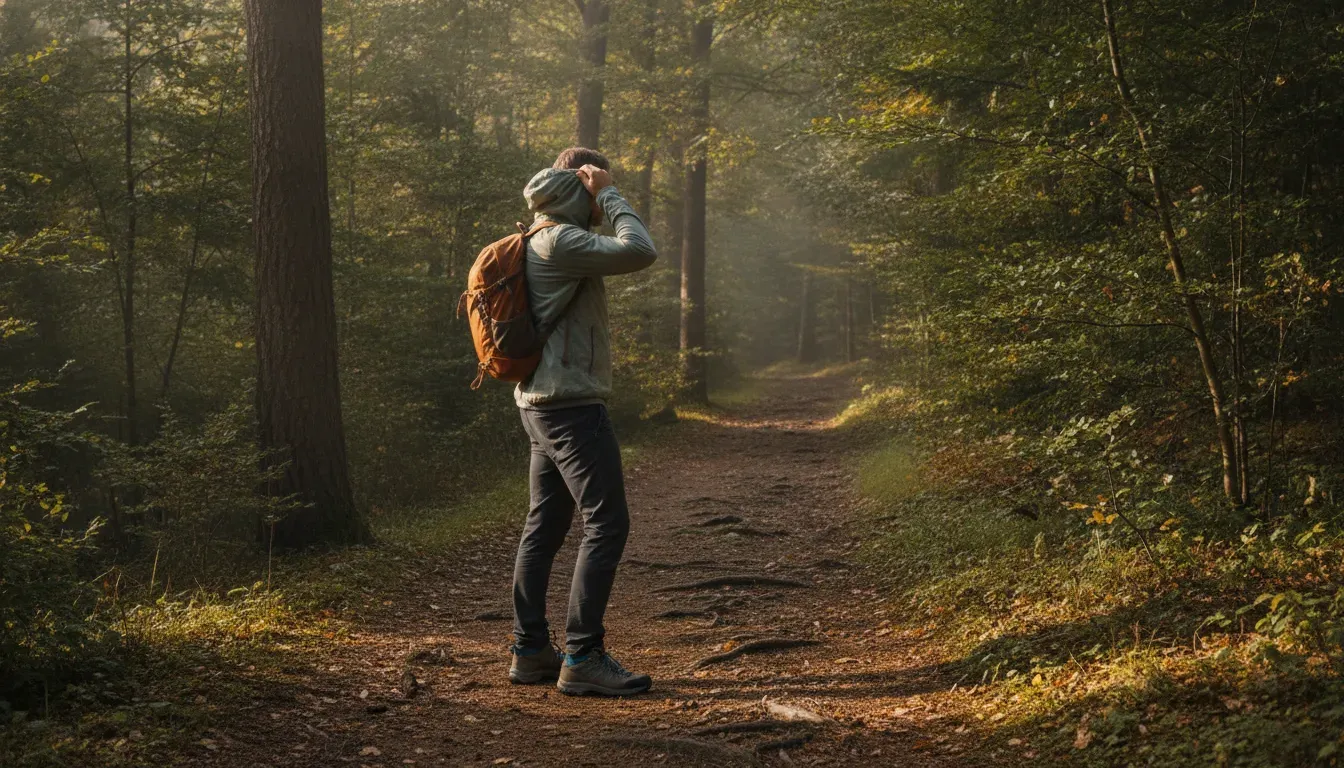
What to Wear for a Day Hike in Different Conditions
Use this as a starting point, then adjust for your own comfort, the trail, and how long you will be out. The table compares outfit approaches rather than prescribing a single kit for every hiker.
| Conditions | Clothing approach | What to keep in mind |
|---|---|---|
| Mild and dry | Comfortable tee with easy-moving bottoms; carry a light layer if the forecast or route suggests it. | A familiar cotton tee can be comfortable for an easy outing, but avoid staying in damp clothing if you become chilled. |
| Cool start, warmer later | Wear a breathable base and bring a removable insulating layer. | Dress so you can shed a layer as you warm up, then put it back on during a break. |
| Warm and sunny | Choose light, comfortable clothing with the coverage you prefer; bring sun protection appropriate to the route. | Exposed trails may feel hotter than shaded ones. Consider water and breaks as well as clothing. |
| Windy or chance of rain | Use layers and pack weather protection suited to the forecast. | Wet fabric can feel cold. Do not count on a cotton layer alone in conditions where you may get soaked or chilled. |
How should your clothes fit for walking?
Comfort over several hours matters more than how an outfit looks when you first put it on. Before leaving, try a few simple movements: raise your arms, take a long step, bend, and sit. Check that the shirt does not pull uncomfortably and that your bottoms allow a full stride. Seams, waistbands, and layers should not rub or restrict you.
Wear shoes that are appropriate for the route and that you have already tested. This guide focuses on clothing, but footwear is part of feeling comfortable over distance. If you are breaking in new shoes, a short walk is a better first test than a long hike.
Pay attention to socks, too. Choose a pair that fits without bunching inside your shoes, and avoid trying an unfamiliar combination for the first time on a long trail. If you know a seam or waistband tends to bother you, a few minutes of testing at home can reveal it before you are miles from the trailhead. Small comfort checks are simple, but they are easier than changing an outfit after a problem starts.
For the same reason, consider how the whole outfit works together rather than judging each item separately. A snug base layer may feel fine until you add another shirt over it; a loose layer might ride up under a pack. Put on the clothes you plan to hike in, add your day bag if you will carry one, and move around as you would on the trail. A practical test helps you make adjustments while you still have options.
Fit can vary by style. Use the size chart as a reference when comparing apparel, and choose what feels comfortable for your intended layers. If you are unsure about a garment's material or construction, check the Know Your Shirt information for more detail.
Can you wear cotton on a day hike?
Sometimes, but conditions matter. On a short or easy walk in mild, dry weather, a comfortable cotton tee may be a reasonable choice if you know how it feels when you move. Cotton can absorb sweat and dry slowly, which can leave you feeling cold when activity slows or the weather turns. For a strenuous hike, cold conditions, or a route where getting wet is a concern, do not assume cotton will keep you comfortable on its own.
That does not mean you need to discard or avoid every cotton item in your closet. It means you should match the fabric to the outing. Consider your pace, the forecast, how much you tend to sweat, and whether you have a dry layer to change into if needed. If you are choosing a responsibly made tee for everyday wear as well as easy outings, learn more about Mindful Supply's approach on the About Mindful Supply page.
How can you pack light and rewear what you own?
A day hike usually does not call for a brand-new outfit. Start with the pieces you already trust, then identify the one item that could make the biggest difference if conditions shift: often a removable warm layer or weather protection. Lay everything out before you pack. If a piece does not serve comfort, movement, or a likely weather need, reconsider bringing it.
- Wear the base layer you have tested and feel comfortable in.
- Pack one layer for warmth or protection based on the forecast.
- Bring a spare top or dry layer when sweat, rain, or changing temperatures make one useful.
- Choose bottoms and socks that have already worked for walking.
- Leave extra outfit changes at home unless the length or conditions of your outing call for them.
After the hike, air out clothing and follow its care instructions before putting it away. Rewearing a clean, comfortable staple for errands or another easy outing can make good use of what you own. Mindful Supply shares its garment background and sourcing details on its shirt-tracking page, which can help you learn more about a shirt's journey. If you want to explore the larger idea behind choosing clothing with care, revisit our guide to responsibly made clothing.
What is a simple day-hike clothing checklist?
Before you head out, ask yourself these questions:
- Have I checked the forecast for the whole time I expect to be outside?
- Can I move freely in my base layer and bottoms?
- Do I have a layer to add or remove if I get warm, stop, or reach a cooler spot?
- Could rain, wind, or strong sun change what I should wear or carry?
- Have I chosen clothes and shoes I know I can walk in comfortably?
You do not need to get every detail perfect. A little planning, a tested outfit, and one useful layer can make a day outside feel easier.
Shop the Classic Tee collection
Frequently Asked Questions
Should I wear jeans on a day hike?
Choose bottoms based on movement, weather, and comfort over several hours. If your jeans restrict your stride, chafe, or feel uncomfortable when damp, a different pair may be a better choice. Test the outfit with a walk before your hike.
Is a T-shirt enough for a day hike?
It can be enough for an easy outing in mild, dry weather, but it is not a complete plan for every season or route. Check the forecast and consider carrying a removable layer, especially if the temperature may drop or you expect to sweat.
Should I bring a change of clothes?
For a short, mild hike, you may not need a full change. A spare top or dry layer can be useful if you expect rain, heavy sweat, or cooler conditions. Let the route and forecast guide the decision.
What is the best way to choose hiking clothes?
Start with clothing you have already worn comfortably, then adjust for expected weather and effort. Check your range of movement, bring a layer when conditions warrant it, and do not rely on one fabric or outfit for every hike.
A thoughtful day-hike outfit is simply one that suits the trail, lets you move, and gives you a way to adjust if the day changes.